Do you need to choose between 2D and 3D titanium mesh for facial bone repair? Are you unsure which one best fits your surgery case?
As a medical buyer or distributor, you want products that are safe, easy to use, and cost-effective.
However, when it comes to titanium mesh, selecting the right type is crucial. 2D mesh is flat and flexible. 3D mesh is pre-shaped and ready to use. Each has different features, uses, and prices.
In this guide, we’ll show you how to pick the right one based on your needs, so your surgeons save time, and your patients get better results.
Understanding 2D and 3D Titanium Mesh
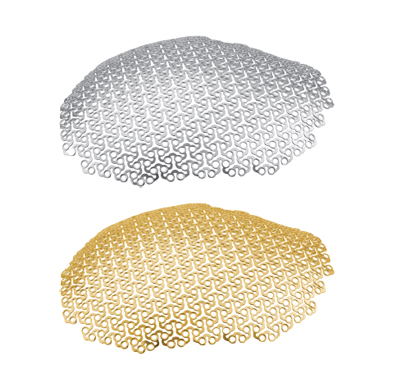
1. 2D Titanium Mesh
Flat, malleable sheets that can be manually contoured during surgery.
Common thicknesses: 0.2mm–0.6mm.
Used for decades in craniomaxillofacial (CMF) surgery.
Advantages:
Cost-effective – Lower manufacturing costs.
Intraoperative flexibility – Can be trimmed and bent to fit defects.
Proven long-term reliability – Extensive clinical history.
Limitations:
Time-consuming adaptation – Requires manual bending, increasing OR time.
Less precise fit – May not perfectly match complex anatomical curvatures.
Higher risk of palpability – Flat sheets may not integrate smoothly in curved areas.
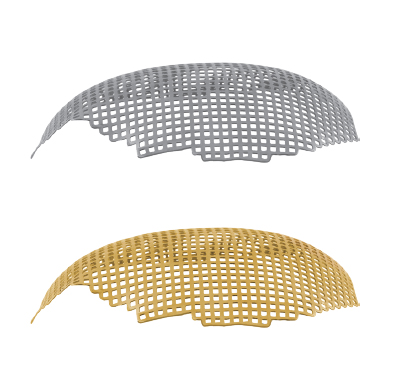
2. 3D Titanium Mesh
Custom-designed, pre-contoured implants based on patient CT/MRI scans.
Manufactured via 3D printing (SLM/DMLS) for patient-specific precision.
Growing adoption in complex reconstructions.
Advantages:
Perfect anatomical fit – Matches exact defect dimensions.
Reduced surgical time – No intraoperative bending required.
Better load distribution – Optimized porous structures enhance bone ingrowth.
Limitations:
Higher cost – Due to custom manufacturing.
Lead time required – Pre-surgical planning & printing take days/weeks.
Limited adjustability – Cannot be modified during surgery.
When to Choose 2D vs. 3D Titanium Mesh?
The decision to use 2D or 3D titanium mesh should be based on several factors.
1. Defect location and complexity:
Best for 2D Titanium Mesh:
Small to medium-sized defects (e.g., orbital floor fractures, localized mandibular defects).
Cases requiring intraoperative flexibility (unexpected defect shapes).
Budget-sensitive procedures where cost is a major factor.
Best for 3D Titanium Mesh:
Large or complex defects (e.g., hemimandibulectomy, cranial vault reconstruction).
High precision reconstructions (e.g., orbital walls, zygomatic arches).
Cases with pre-operative imaging (planned tumor resections, trauma repair).
2. Surgeon preference and experience:
Experienced CMF surgeons may prefer 2D mesh for maximum control.
For newer surgeons or time-sensitive cases, 3D mesh offers convenience and consistency.
3. Available surgical time:
In emergency trauma or OR time restrictions, pre-contoured 3D mesh saves valuable minutes.
4. Aesthetic importance:
In visible areas like the midface or orbital rim, the anatomical accuracy of 3D mesh often results in better cosmetic outcomes.
Future Trends: Will 3D Replace 2D Mesh?
While 3D-printed titanium mesh offers superior precision, 2D mesh remains relevant due to its affordability and adaptability. The future likely involves:
Hybrid approaches (combining a 2D mesh for adjustability with 3D-printed parts for critical areas).
More cost-efficient 3D printing as technology advances.
Bioactive coatings to enhance osseointegration in both types.

At Shuangyang Medical, we offer both 2D flat titanium mesh and 3D preformed titanium mesh, designed to meet a wide range of maxillofacial surgical needs. With years of experience in CMF implant manufacturing, we combine precision CNC production, biocompatible Grade 2/Grade 5 titanium materials, and customizable sizing to support surgeons with reliable fixation and excellent anatomical fit. Whether you need flexible sheets for irregular defects or pre-shaped meshes for orbital and midface reconstruction, we deliver consistent quality, fast lead times, and OEM/ODM service to match your clinical and business goals.
Post time: Jul-11-2025